

This is the 14th Tangram from Observing China, where the leading China experts give a diverse range of succinct responses to key questions on the development of the People’s Republic of China (PRC).
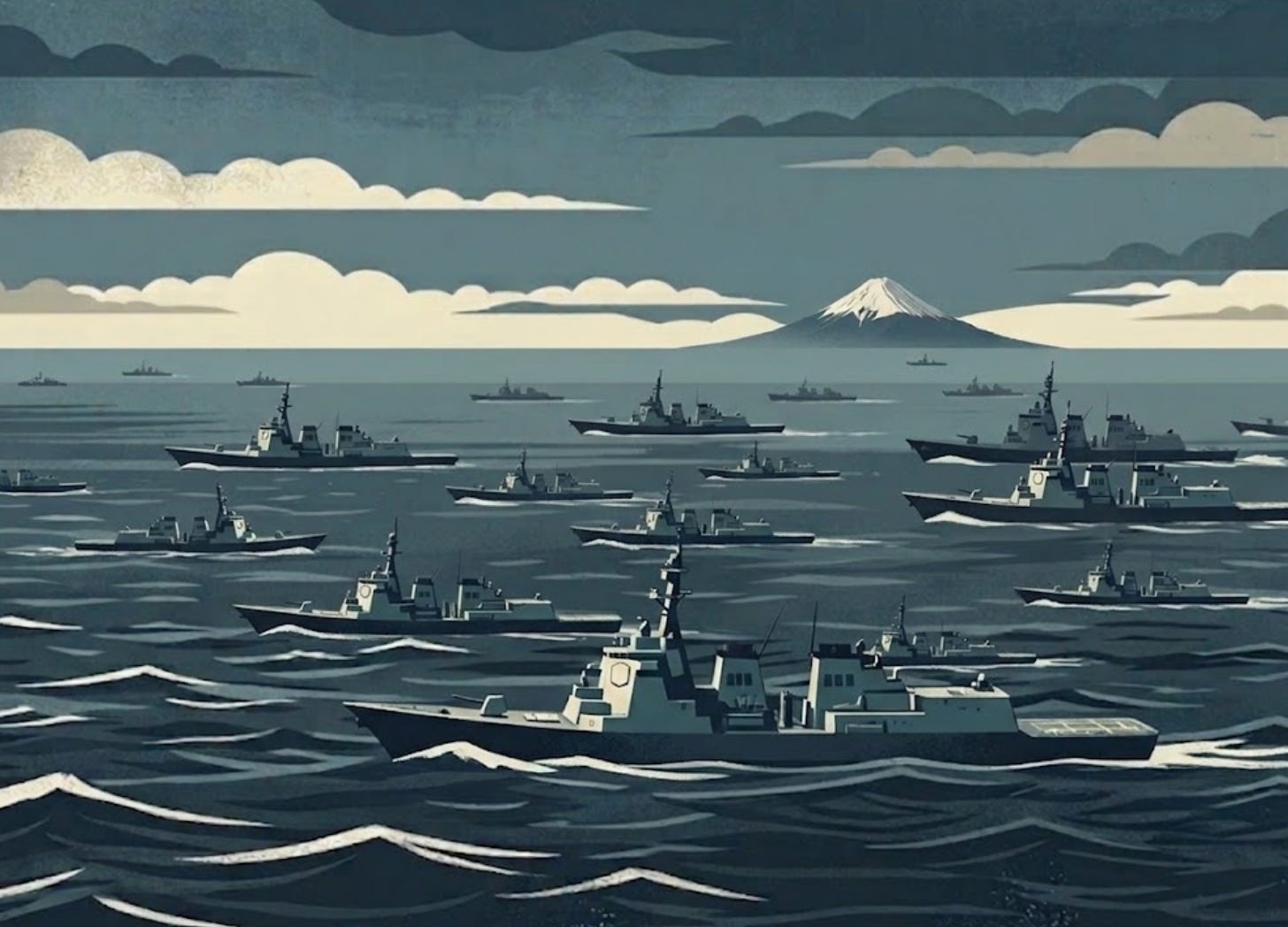
Driven by the People’s Republic of China’s (PRC) opaque, sustained militarisation over the last two decades – as well as its growing assertiveness across the Indo-Pacific region – Tokyo’s relationship with Beijing has shifted. In response, Tokyo has embarked on a historic modernisation of the Japanese Self-Defence Force (JSDF), marked by a 9.4% defence budget increase, the deployment of missile launchers, and a rhetorical shift away from conditional pacifism. For the PRC, the suggestion by Sanae Takaichi, Prime Minister of Japan, that a Taiwan conflict could trigger Japanese military involvement poses a significant threat to Chinese ambitions. While both nations maintain deep economic interdependence, mutual suspicions have spiked.
The PRC has sought to denounce these defensive measures as ‘reckless new militarism’. Simultaneously, Beijing has intensified its pressure campaign by imposing dual-use export controls on dozens of Japanese companies, leveraging economic sanctions, and conducting joint bomber exercises near Japanese airspace. While diplomacy continues ahead of the Asia-Pacific Economic Cooperation (APEC) summit in Shenzhen in November 2026, the PRC’s risk tolerance over potential Japanese involvement in a Taiwan contingency – as well as its willingness to force a confrontation over its claims to the Senkaku Islands – remains uncertain.
Regardless of the immediate fallout, this friction serves as a test for the PRC’s regional military posture and its broader geopolitical vision. As Tokyo solidifies its deterrence capabilities, whether Beijing alters its assertive trajectory or further escalates its security policy warrants investigation.
This forms the basis of this month’s Tangram, where six experts weigh in with their observations to answer the following question: Does Tokyo’s shifting defence posture change Beijing’s strategic calculus?
Prof. Nobukatsu Kanehara
Executive Director, Sasakawa Peace Foundation; Professor, Reitaku University; and International Fellow, Council on Geostrategy
The Pacific region after the Second World War has been an almost exclusive sphere of influence of the United States (US). The PRC is the first challenger to America, and has an ambition to carve out its own sphere of interest, as well as to annex the free and democratic island of Taiwan.
The US has only five allies in the region; Japan, Korea, the Philippines, Thailand, and Australia. Japan’s role is important to engage America in the Indo-Pacific region, all the more so as the US now represents only 25% of the world economy and Donald Trump, President of the US, is anti-globalist and increasingly inward looking. Japan should thus bear the larger burden.
The biggest issue for America and its allies in the region is to prevent a Taiwan contingency involving the PRC. Such a conflict would devastate the frontline players like Taiwan, Japan, and the Philippines. The East and South China seas would be closed for the merchant ships as they would become battlefields. Maritime trade with the PRC would be cut off totally. In the short term, investment in dollars and euros would desert East Asia. A Taiwan contingency would involve the world’s biggest national economies, and would have a huge impact upon the global economy. It must be prevented.
In 2015, Shinzo Abe, then Prime Minister of Japan, changed the constitutional interpretation so that Japan could participate in regional contingencies, i.e., the ones that could involve American forces in Taiwan, Korea, and the Philippines. Under the Japan-US Security Treaty signed in 1960, If the US intervenes in a Chinese invasion of Taiwan, Japan has to let American forces use their bases in its territory. Abe declared that, in addition to this, Japan could also join the fighting in the context of collective self-defence.
The JSDF are almost 250,000 personnel strong, with roughly 300 combat aircraft, 50 destroyers, and more than 20 submarines. This is a substantial amount to help the US. Fumio Kishida, former Prime Minister of Japan, decided to double the defence budget, and Takaichi will accomplish the goal this year. It will be more than JP¥11 trillion (£50 billion), although it seems smaller than expected in dollar terms because of the yen’s drastic depreciation: US$1 is JP¥160 today; it was JP¥110 at the time of Abe.
Visiting Researcher, Research Centre for Advanced Science and Technology (RCAST), University of Tokyo
Japan’s defence transformation is reshaping the regional security landscape, but Beijing has yet to revise its own strategic calculus fundamentally. The 2026 defence budget exceeds the 2% of Gross Domestic Product (GDP) benchmark two years ahead of schedule. Type 12 and Type 25 standoff missiles are beginning to enter service across the Southwest Islands, defence equipment transfer rules have been liberalised, and Takaichi has stated more explicitly than her predecessors that a Chinese attack on Taiwan could constitute a survival-threatening situation for Japan. Together, these developments mark the continued normalisation of Tokyo’s conventional deterrent rather than a fundamental departure from its post-war security policy.
Beijing, however, has incorporated these developments into its longstanding narrative of Japanese remilitarisation and strategic encirclement, rather than treating them as a reason for restraint. Its response has remained consistent with that assessment. Psychological, legal, and information pressure has increasingly focused on Takaichi personally. Joint bomber patrols with Russia continue to test Japan’s air defence posture. At the same time, two rounds of export control listings have named around 80 Japanese entities, including four defence research institutions, extending economic coercion into the sectors that underpin the country’s long-term defence industrial base.
This reflects the PRC’s assessment that Japan’s trajectory matters more than its current capabilities. While Tokyo has committed unprecedented resources to defence, many of its most significant capabilities will only become operational over the coming decade. Munitions stockpiles remain limited, missile defence capacity continues to face pressure, and sustainment remains an area requiring further investment. From Beijing’s perspective, this leaves a window in which coercion below the threshold of armed conflict can impose political and economic costs on Japan before its military modernisation reaches full effect.
That window, however, is not indefinite. If Tokyo holds the line at 2% and resists pressure to overreach towards the higher targets now under debate, deepens interoperability with Washington, and closes the gap on sustainment, the deterrent value becomes far harder for Beijing to discount. At that point, the strategic balance underpinning the PRC’s calculations over the First Island Chain begins to shift more fundamentally.
For now, Japan’s changing defence posture has not deterred the PRC from increasing pressure. Instead, it has prompted Beijing to intensify coercive measures designed to slow or raise the domestic costs of Tokyo’s strategic shift. Whether Japan ultimately changes the Chinese calculus will depend less on the scale of today’s budget increases than on its ability to sustain the reforms already underway and to translate political commitments into operational capability.
Dr I-Chung Lai
President, The Prospect Foundation
Since late last year, Beijing has noticeably intensified its diplomatic and rhetorical attack against Tokyo. Initially, the PRC focused its criticism on Japan’s growing willingness to support Taiwan during a specific cross-strait contingency scenario. However, this has recently escalated into more aggressive direct accusations of ‘new militarism’ – a provocative charge that Shinjirō Koizumi, Minister of Defence of Japan, firmly and publicly refuted during his remarks at the Shangri-La Dialogue in Singapore.
Interestingly, Beijing remained relatively quiet when Tokyo first announced its historic arms buildup and defence policy overhaul in 2022. This sudden, sharper reaction indicates a fundamental shift in the PRC’s strategic assessment of Japan. This recalibration was likely triggered by the country’s rightward political turn and the Takaichi administration’s more explicit, public support for Taiwan. Anticipating a much more hawkish stance in Tokyo’s upcoming defence documents, Beijing has proactively reformulated its strategic posture toward its neighbour.
While Japan’s public alignment with Taiwan will not alter the core determination displayed by Xi Jinping, General Secretary of the Chinese Communist Party (CCP) to achieve unification during his tenure, the ‘Takaichi factor’ forces Beijing to recalculate its military options. The PRC can no longer plan solely for possible American military intervention in a Taiwan scenario; it must now seriously factor in a more responsive and substantial Japanese involvement.
Compounding the PRC’s security anxieties is Japan’s fundamental transition from passive, post-war self-defence to a more proactive, potentially pre-emptive posture. This is underscored by Tokyo’s planned deployment of long-range Tomahawk cruise missiles, capable of striking targets directly within Chinese territory. Furthermore, Japan has expanded its regional security profile by providing critical defence capacity building assistance to the PRC’s maritime neighbours, including the Philippines, Vietnam, and Indonesia. This defence initiative has significantly enhanced Japan’s security cooperation with countries surrounding the PRC, causing visible anxiety in Beijing.
Ultimately, Beijing structurally objects to Tokyo assuming a leadership role in East Asia, just as it opposes India’s dominant position in South Asia. The PRC views its competition with both nations as an immutable reality dictated by strategic geography, largely independent of their specific positions on Taiwan. Even if Tokyo and New Delhi remained entirely passive on cross-strait issues, Beijing would still view them as strategic competitors in a region where it believes it should enjoy exclusive hegemony. The PRC’s heightened diplomatic offensive and high-profile criticism this year reflect its deep concern over Japan’s increasingly competitive regional trajectory.
Indo-Pacific-focused Journalist and Independent Researcher
Japan’s deployment of long-range counterstrike missiles and its decision to lift restrictions on lethal arms exports mark a fundamental recalibration of its post-war defence posture. Koizumi has even called for an open debate on nuclear weapons – something once unthinkable given Japan’s post-war pacifism. For the PRC, these developments introduce uncomfortable complications into its strategic calculation regarding Taiwan.
Tokyo’s expanding military capabilities now force Beijing to contemplate a genuinely multi-theatre conflict scenario. Long-range missiles positioned along Japan’s south-western islands can cover the Taiwan Strait, the East China Sea, and some parts of the Chinese mainland. Perhaps more troubling for Beijing is how the loosening of arms export restrictions enables regional partners, such as the Philippines, to acquire advanced systems.
When these countries operate compatible Japanese-sourced equipment and have trained alongside the JSDF, the PRC must plan not for isolated contingencies but for coordinated responses across multiple potential flashpoints simultaneously. This represents a dramatically more complex operational challenge than previously faced.
These defence developments cannot be easily reversed, and Beijing is aware of this reality. That is why it has stepped up accusations of Japan attempting to revive militarism while reacting fiercely. Yet, the implications extend beyond immediate military calculations. Chinese scholars now largely believe that the deterioration in bilateral ties, coupled with Tokyo’s evolving defence posture, represents not another cyclical downturn but systemic structural decline. The 2014 APEC model – when Xi and Abe’s handshake broke the ice between the two nations – appears unlikely to be replicated in Shenzhen in November.
If Chinese strategists conclude that Japan’s military modernisation and regional security network will only strengthen with time, the logical implication is to act before that transformation becomes mature and interoperability becomes deeply embedded. Rather than deterring Chinese action, Tokyo’s evolving posture may compress Beijing’s perceived window of opportunity.
The uncomfortable reality is that Japan’s shifting defence posture does change the PRC’s strategic calculus, but not necessarily in ways that enhance stability or deterrence. Whether this ultimately accelerates or delays Chinese action remains an open question, which will require time and access to Chinese strategic thinking to answer.
Founder, Strategic China Policy Group
Tokyo’s changing defence posture does not fundamentally alter Beijing’s strategic calculus, but it does make that calculus considerably more complicated.
For much of the post-war period, Asian security rested on a ‘hub-and-spokes’ system of bilateral alliances centred on the US. Although regional institutions and minilateral groupings have since proliferated, American security guarantees remain the foundation of the region’s security architecture. The so-called ‘Donroe Doctrine’ under the second Trump administration points towards a different worldview, in which major powers exercise greater control within their respective spheres of influence and US commitments beyond the Western Hemisphere become more selective and transactional.
Having long sought to expand its regional primacy without triggering a direct military confrontation with Washington, Beijing sees uncertainty over American commitments as a strategic opportunity. In this context, Japan’s changing posture complicates Chinese calculations in at least two ways.
Firstly, stronger Japanese capabilities may reinforce the US presence in the region. Trump has repeatedly portrayed American alliances as unequal burdens and criticised the US-Japan security relationship as ‘one-sided’. By increasing defence expenditure and modernising its military, Japan is seeking to establish itself as a more capable – and therefore more valuable – ally. If Tokyo can demonstrate that it is shouldering more of the regional defence burden, Washington may have a stronger incentive to maintain its forward presence despite its increasingly transactional approach. Any Chinese operation involving Taiwan or the East China Sea must therefore account for a more resilient alliance and a wider network of launch sites, sensors, and defensive assets.
Secondly, a Japan more committed to regional security could help build a denser network of partnerships less dependent on shifts in US policy. Its expanding cooperation with Australia, the Philippines, South Korea, and South East Asian partners includes joint exercises, defence equipment transfers, reciprocal access agreements, and maritime capacity building. Although these initiatives remain far short of a formal alliance system independent of the US, they nonetheless point towards a regional order less vulnerable to sudden changes in Washington and better able to raise the political and operational costs of Chinese coercion.
Japan’s defence buildup is unlikely to match the scale or pace of the PRC’s in the near future, but it is making it harder for Beijing to assume that uncertainty over American commitments would automatically translate into Chinese predominance.
Research Fellow (National Security), Council on Geostrategy
Japan’s rearmament efforts, which have been both physical and cognitive, will have a real impact on Beijing’s strategic calculus. It is important to recognise however, that this rearmament is not unprecedented since the end of the Second World War.
Through the 1960s and 1970s, Japan underwent a comprehensive rearmament effort which resulted in a highly capable Self-Defence Force designed to deter and, if necessary, fight the Soviet Union in the Pacific. Tokyo’s more modern ‘security renaissance’ has been a slow burn at first, with post-Cold War peace dividend thinking slowly put to bed owing to the enormous and sustained military buildup and modernisation of the Chinese military.
In the physical realm, Japan has been playing catch-up, made difficult by an ageing population and stagnant economy. Yet, Tokyo is responsible for the world’s tenth largest defence budget, with plans to raise it further in the coming years. Japan also gets serious ‘bang for its buck’ with its budget. It has more than 20 conventional submarines, over 50 major surface combatants, over 300 combat aircraft, and a capable suite of both offensive and defensive missile capabilities.
The JSDF are both growing and modernising, and are well designed to contribute to a potential fight against the PRC in the Western Pacific. Japan’s growing capabilities will weigh heavily on the minds of Chinese military planners. Tangled with American military forces and well versed in training for local contingencies, the JSDF would make a significant contribution if drawn into a conflict.
Almost as important as the growing capabilities has been the mindset shift. Where in previous decades Beijing may have calculated that Tokyo would be more likely to try and avoid intervention in a regional conflict due to internal political debates, this assumption is no longer as certain. This cognitive rearmament has included legal changes which now allow Japan to join conflict in defence of allies and reduced export controls on defence equipment. The activities of the JSDF have also become bolder, including plans for forward deployment of anti-ship missiles on Yonaguni Island (the closest Japanese island to Taiwan), and joining US-Philippines exercises as combatants for the first time as opposed to observers.
Beijing now has to assume that the full weight of an increasingly capable Japan must be factored into any potential plans for military aggression in the Western Pacific, seriously bolstering deterrence against the PRC.
If you would like to explore any of the Council on Geostrategy’s PRC-focused research papers, click here to visit the China Observatory.