

This is the 13th Tangram from Observing China, where the leading China experts give a diverse range of succinct responses to key questions on the development of the People’s Republic of China (PRC).
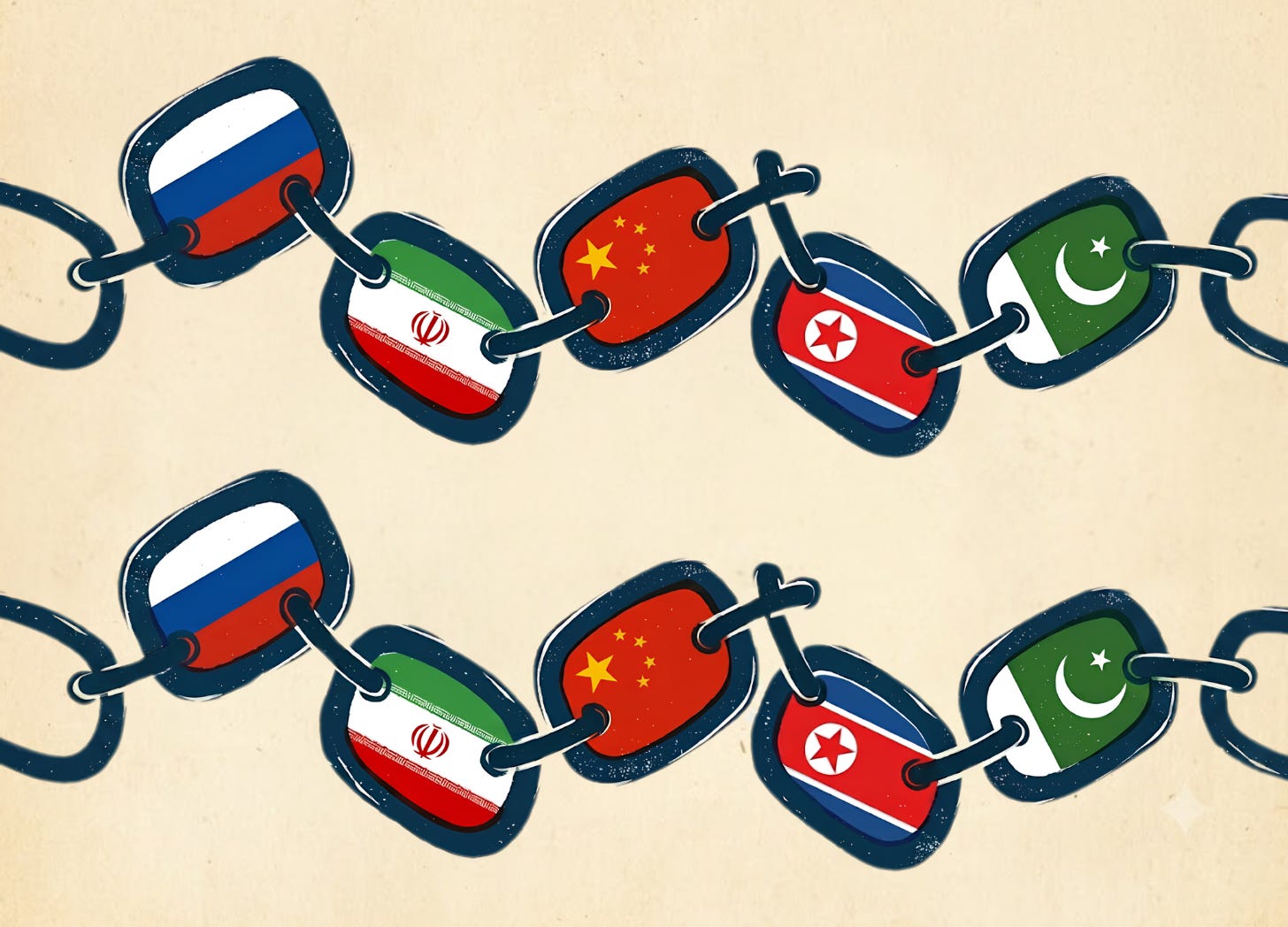
On 17th June 2026, the State Council of the People’s Republic of China (PRC) released a sweeping new white paper: ‘More Just and Equitable Global Governance’, positioning Beijing as the architect of a reformed, United Nations (UN)-centric international system. By championing the so-called ‘Global South’ and calling for true multilateralism, the paper seeks to present the PRC not as a disruptor of the global order, but as a stabilising force in an increasingly volatile geopolitical era.
Yet, beneath this rhetorical commitment to global solidarity, the reality of Beijing’s international alignments faces scrutiny. The PRC’s vast and carefully curated network of ‘strategic partnerships’ – most notably its enduring ties with Russia, its strategic engagements with Iran amid ongoing Middle Eastern conflicts, and its broader economic outreach to the developing world – is routinely tested by global crises.
Both Beijing and its partners frequently tout these relationships as evidence of an emerging, multipolar consensus, leveraging them to secure vital resources, circumvent trade restrictions, and counter the United States’ (US) hegemony. However, in times of acute international crisis, the PRC has demonstrated a calculated pragmatism. Beijing has historically hesitated to cross critical economic and military red lines, striving to balance its commitments to its strategic partners against the overriding domestic imperative to forestall comprehensive economic decoupling from free and open nations’ markets.
International analysts remain divided on whether this web of diplomatic alignments constitutes a genuine, resilient coalition, or merely a transactional façade that fractures under pressure. As such, for this edition of the Tangram, we asked five experts the following question: When push comes to shove, do China’s ‘strategic partnerships’ carry real weight?

Charles Parton OBE
Chief Adviser, China Observatory, Council on Geostrategy
The PRC’s ‘strategic partnerships’ should be thought of as pizzas and toppings. There is a base – a ‘partnership’, almost always spread with tomato ‘strategic’, and to which a range of topping adjectives can be added according to taste. Some toppings are more expensive or of higher value than others. Countries can start by adding ‘cooperative’ and ‘friendly’, progress to ‘comprehensive’, and then move on to ‘all-weather’.
Toppings are not mutually exclusive: ‘all-weather comprehensive’ is not uncommon. The pizzeria has updated its menu, for example, adding the topping ‘for the new era’ and ‘community with a shared future’, whose flavour seems to be particularly appealing to countries of the Global South – the full phrase, ‘community with a shared future for mankind’, is of course a prime ingredient of thought on diplomacy by Xi Jinping, General Secretary of the Chinese Communist Party (CCP).
Beijing likes to use these toppings for symbolism, signalling, and reward. ‘For a new era’ suggests that global governance is changing, and that the country supports the PRC’s efforts to establish a different world order. Russia was the first to add this topping. Pakistan and the PRC are close, and since 2018 they have agreed to build a ‘closer China-Pakistan community of shared future in the new era’, combining two toppings. Often one of the outcomes of leaders’ visits will be the announcement of the addition of a new topping.
Once ordered, a topping cannot be removed. The United Kingdom (UK) is the only country to have established a ‘Global Comprehensive Strategic Partnership for the 21st Century’. This was in 2015, on the establishment of the ‘Golden Era’. Poor relations since then have not led to demotion. Since the visit by Sir Keir Starmer, outgoing Prime Minister, to the PRC early this year, the phrase ‘long-term and consistent comprehensive strategic partnership’ has been bandied about. It is not clear whether this is formally on the topping menu.
The PRC does not have allies (only with North Korea does it have an official alliance). It is a solipsistic power. It does not wish to be bound by obligations; rather, it prizes the flexibility of ill-defined partnerships. These toppings should be regarded as a form of propaganda, which might play on the vanity of some leaders, but in the words of Gilbert and Sullivan (in Ruddigore), ‘so it really doesn’t matter, matter, matter, matter, matter’. Seeking truth from facts or acts is a better guide to the PRC’s foreign relations.
International Fellow, Council on Geostrategy, and Senior Geopolitical Adviser, Business Finland
The question contains its own error. ‘When push comes to shove’ is a North Atlantic Treaty Organisation (NATO) Article 5-type ‘real weight’ test: it asks whether partners will fight, bleed, and hold the line. However, Beijing has never built its partnerships to pass that test. Judging them against free and open nations’ alliances is like comparing apples to oranges. The honest question is not whether they carry weight, but what they are for.
The PRC’s partnership architecture is deliberately graded, non-binding, and entrapment-averse. Optionality is in the design. Beijing studied Soviet overreach and drew the obvious lesson: no mutual-defence tripwires, no clients it is obliged to rescue, no commitments that convert a partner’s crisis into its own. The absence of hard guarantees preserves freedom of manoeuvre and a narrative win over ‘Cold War blocs’. So, the weight depends entirely on the metric, negligible as collective defence, considerable as an instrument for eroding US primacy without firing a shot.
The ‘CRINK’ – comprising the PRC, Russian, Iran, and North Korea – could perhaps be seen as the paradigm case. It is not an alliance but an alignment without obligation: a force multiplier for sanctions evasion, military-industrial sustainment, diplomatic cover, and the normalisation of revisionism. It works because no member is committed enough to become a liability.
Yet, deepening cooperation, which is particularly visible in the Chinese-Russian relationship, should not be ignored. That being said, while the Kremlin’s dependence on Beijing has become a structural submission, it is far from a matter of simple fidelity; the relationship runs deeper than merely what a junior partner accepts after exhausting its alternatives. Chinese-Russian shared ambitions are well-served by the arrangement, although the relationship’s sternest test is likely still ahead.
Here is the trap that Beijing has built for itself. The PRC wants to be a system builder without the costs of an alliance leader. However, partnerships that give little back in times of crisis invite hedging. Gulf states court Washington and Beijing simultaneously, and Central Asia plays every suitor. The very flexibility that shields the PRC from entrapment also caps the loyalty it can command. Partners drift if they cannot extract substantial returns, and the endgame of seeding an alternative order stalls under its own logic.
So do these partnerships carry weight? Yes – but a contingent, reversible weight, and that is exactly the vulnerability. Beijing’s great strength, that it can never be entrapped, is also its ceiling: The order that the PRC wants to build demands the very commitments it has spent decades refusing to make.
Lecturer in International Relations, University of Oxford
Mao Zedong once alleged that the PRC’s relationship with North Korea was ‘as close as lips and teeth’, where ‘if the lips are gone, the teeth will be cold’. This characterisation, however, fails to capture the nuances in the PRC’s frosty past and present relationship with its now-nuclear neighbour of North Korea.
For over two decades, the PRC has been – and remains – North Korea’s principal economic benefactor, accounting for over 95% of North Korea’s external trade. Over the past year, trade levels have rebounded to near pre-pandemic levels, but Beijing remains frustrated at having failed to persuade Pyongyang to adopt a similar ‘socialist’ economic model to its own.
After North Korea conducted its first nuclear test in October 2006 – while the Six-Party Talks, hosted by the PRC, were ongoing (although North Korea suspended its participation) – Beijing called upon Pyongyang to denuclearise. Over time, however, the PRC’s tolerance for its nuclear neighbour has grown, especially since the 2020s. Beijing and Moscow supported the UN Security Council sanctions on North Korea, owing to its expanding nuclear and missile programmes – the last of which was imposed in December 2017. Yet, like Russia, the PRC’s commitment to them has been flimsy.
In aiding North Korean sanctions evasion through illicitly facilitating coal and oil transfers and hosting tens of thousands of the country’s workers, today’s PRC now accepts a nuclear North Korea in all but name. Its relationship with North Korea has gone from what can be called ‘reluctant tolerance’ to ‘unreluctant acceptance’.
This certainly carries weight. When Xi visited Pyongyang last month, there was no mention of North Korea’s nuclear programme, let alone denuclearisation. The PRC does not want to bear responsibility for the North Korean nuclear issue.
The PRC’s attitude to the newfound alliance between North Korea and Russia has often been incorrectly described as one of ire. It may be feeling emetic at North Korea having two treaty allies (of which it is one) and itself having only one in North Korea. Yet, were Beijing truly angry, it could stop enabling the Kremlin’s invasion of Ukraine by supplying dual-use technologies and cease helping Pyongyang to circumvent sanctions. It has done neither of these things.
The PRC’s priority on the Korean Peninsula has long been stability. Its red lines remain to ensure that North Korea does not do anything that goes against its interests or drags it into any unwanted conflict. Crucially, however, these uncertainties will not stop it from colluding with the Kremlin and/or Pyongyang to undermine the US-led international order. Here, the PRC is highly complicit, whether through its own geopolitical and economic coercion or its conniving with other rogue states. It is about time that free and open nations took it seriously.
Law, Defence, and Geopolitical Affairs Researcher
Naturally, there is a prerequisite question concerning which pressure points are being applied, and in which direction such tacit forces would seek to push the PRC.
The ‘strategic partnerships’ that Beijing has made in the interest of advancing economic strength, as well as geopolitical dominance, are intrinsically linked to the belief that the US-led hegemonic order should be dislodged, or is in fact coming to an end. This bet is hedged against a successful record of the PRC increasing its share of global consumer markets, engineering intellectual property to supplant American technological dominance, and selectively undermining US sanction regimes.
At the base of Beijing’s strategic partnerships is the cohort of non-aligned states able to reinforce mutual and material gains, which shift global attitudes in perceiving Russia, Iran, and North Korea as errant states. As long as the Kremlin provides reliable energy sourcing and purchases military technology; as long as Tehran permits preferential shipping access and discounted crude; and as long as a placated Pyongyang serves as a wildcard deterrent against escalating military action in the Indo-Pacific, the PRC’s strategic partnerships will not be compelled into conciliatory realignment with free and open nations’ interests.
However, these ‘strategic partnerships’ are indeed transactional and limited. The strength of the PRC’s relationship with Russia at least will be tested by Beijing’s growing discomfort regarding over-reliance on Russian energy, and weariness of the Kremlin’s more casual attitude towards ensuring global market stability. Both the PRC and Russia will face leadership succession in the near future. Even if committed to maintaining the party line, any incoming regime will be eager to assert definition, which may or may not follow suit of an arrangement between Xi and Vladimir Putin, President of Russia.
Furthermore, the PRC’s own global ambitions threaten to weaken the integrity of its partnerships. Despite entering a new era of innovation, a number of Chinese industries still rely on state intervention and subsidies to compete unevenly in free markets, which could begin to overwhelm and frustrate trade partners. Although long anticipated, a move on Taiwan will demand a hard cessation of certain economic-based arrangements, particularly among European nations. The increasingly aggressive tactics of the PRC’s distant-water fishing fleet may become a sticking point for coastal partners in the Global South.
The PRC has benefited greatly from open, global exchange, but does not invite expanding investment at home, and will struggle to match the fiscal maturity of New York or London. Beijing may be able to disrupt the Washington consensus, but cannot sustain offensive military action without formal allies in defence. It may challenge US leadership, but it cannot replace it. Ultimately, the PRC’s ‘strategic partnerships’ do carry weight to the extent of being able to evade the traditional containment strategies of the free and open international order, but its relationships possess fissures that will expand under the stress of overleveraged objectives.
International Fellow, Council on Geostrategy
When it comes to diplomacy, Beijing is careful not to make any commitments that could see it dragged into an armed conflict. Boasting ‘partnerships’ with well over 100 countries around the world, with varying degrees in depth and scope, the CCP employs characteristically obscure terminology for these agreements.
Chinese diplomatic nomenclature is not fully standardised, and different words can be added to these terms which would leave the average reader none the wiser. With Pakistan – Beijing’s closest security partner – for example, the PRC holds an ‘All-Weather Strategic Cooperative Partnership’, while with Russia it has a ‘Comprehensive Strategic Partnership of Coordination for a New Era’, which has included joint military drills. Regardless of the label, Beijing does not have any mutual defence treaties with other countries.
What many have noticed in the past year is that these partnerships offer little help from the PRC when the going gets tough. When Iranian Ayatollah Ali Khamenei was assassinated earlier this year, Beijing responded with little more than words of reproach, although American intelligence pointed to Chinese supply of weapons to Tehran’s authoritarian regime earlier this year during the conflict. In fact, many of these ‘strategic partnerships’ appear to favour the PRC disproportionately. Tehran has seen little of the 25-Year Comprehensive Strategic Partnership Agreement it signed with Beijing in 2021, which saw the PRC agree to invest US$400 billion (£300 billion) in Iran over the next 25 years.
Rather, this deal gave Beijing the ability to purchase Iranian oil at discounted rates due to sanctions, with the PRC purchasing roughly 90% of Iran’s oil exports. However, these only account for approximately 12% of total Chinese oil imports, leaving Tehran far more reliant on Beijing. Perhaps it is also worth noting that in April, both Russia and the PRC voted in favour of Iran during a UN Security Council meeting, vetoing a resolution calling for Tehran to cease attacks in the Strait of Hormuz. Beyond preserving Iran’s leverage in the ongoing conflict, the PRC also retained its status as an intermediary.
It is not helpful to try to find a more familiar equivalent of these ‘strategic partnerships’, and they should be understood as best they can in their own right. That being said, it will certainly be interesting to see what – if anything – Beijing does to protect its ‘ironclad friendship’ with Cuba, should Washington act on its threats towards the Caribbean nation.
If you would like to explore any of the Council on Geostrategy’s PRC-focused research papers, click here to visit the China Observatory.