

This is the 11th Tangram from Observing China, where the leading China experts give a diverse range of succinct responses to key questions on the development of the People’s Republic of China (PRC).
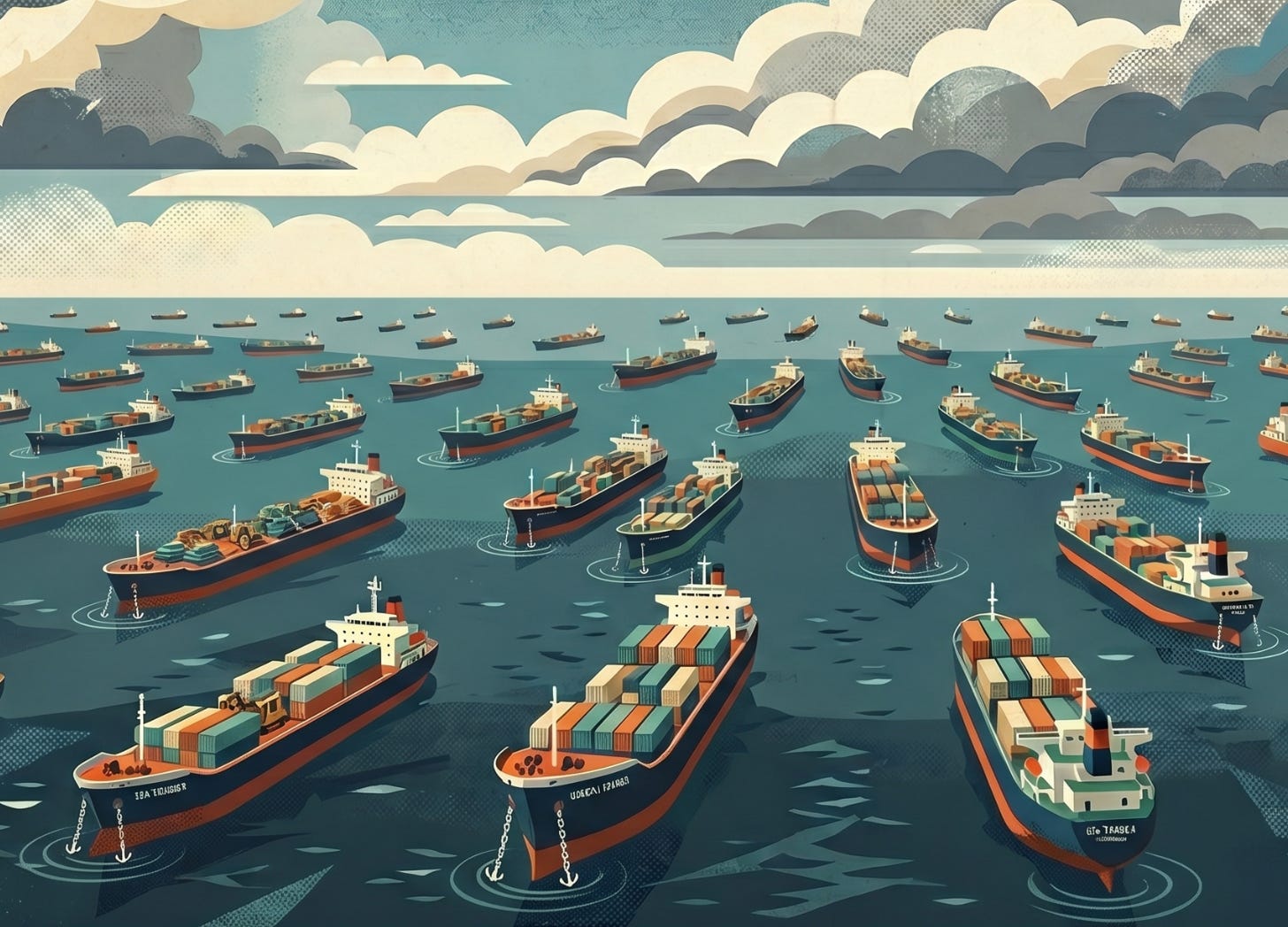
The near-closure of the Strait of Hormuz due to the United States (US)-Israel-Iran conflict caused considerable disruption to the global economy, highlighting the fragility of international maritime trade. As one of the world’s most critical strategic choke points, there has been a severe impact on the global flow of commercial goods and oil supplies. For the People’s Republic of China (PRC) – the world’s largest importer of crude oil – the restriction of this vital artery could pose a challenge to both its national energy security and its heavily export-reliant economy. While the country has invested heavily in both strategic reserves and diversification, challenges remain.
The near-closure also forces diplomatic choices. In recent years, the PRC has increasingly sought to position itself as a responsible global actor and a stabilising diplomatic force. Indeed, at the end of March, Pakistan and the PRC released a five-point peace plan for ending the conflict in the Middle East, further underlining Beijing’s peaceful credentials in contrast to Washington. While a ceasefire was negotiated, action is still occurring, including an American blockade, and the future of the US’ presence in the region is not yet entirely clear.
Regardless of the immediate fallout, the fact remains that this crisis served as a stark stress test for the PRC’s economic resilience, as well as its broader geopolitical vision. How Beijing adapts its foreign and security policy in the wake of this vulnerability requires investigation.
This forms the basis of this month’s Tangram. In this article, five experts weigh in with their observations to answer the following question: What has Beijing learnt from the near-closure of the Strait of Hormuz?

George Magnus
Member of the Advisory Council of the China Observatory, Council on Geostrategy
Iran’s ability to exploit the Strait of Hormuz choke point may have left Beijing feeling smug about its own energy self-sufficiency policies over the medium term – including green tech and electrification – the advantages of stockpiling, and the US being drawn into a new crisis far away, but also at odds with some of its allies. Nevertheless, the PRC will need to weigh much more than this in assessing the lessons to be learned from Hormuz.
Beijing’s unwillingness, or inability, to use its own navy to secure distant waterways may not apply closer to home, but it reflects the PRC’s maritime capacity limitations. Building more solid regional relationships with countries that have vested interests in freedom of navigation would seem appropriate, although inconsistent with Chinese policy in the South China Sea.
The vulnerability of important geographic and waterway choke points to asymmetric conflict and a relatively modest cache of enforcement capabilities has been clearly demonstrated. Beijing will want to minimise the harm that others could inflict on it by blockading or restricting access through the Malacca and Taiwan Straits.
The PRC, which gets over 40% of hydrocarbon imports, or close to a quarter of consumption, from the Gulf, will have become more choke point-conscious. It might need to switch steadily to increasing its imports from Russia, Central Asia, and perhaps the Myanmar corridor if practical, while encouraging overland and choke point-bypass supplies from Gulf Cooperation Council (GCC) countries.
The economic damage done by the de facto closure of the Strait of Hormuz in terms of higher energy prices, disruption to supply chains (in this case also fertilisers and petrochemicals, for example), and the hit to global demand comprise a salutary lesson for the world’s biggest export nation and centre of global supply chain networks. The PRC’s craving for stability in the Middle East, as well as in a broader geography, is much less a yearning for peace than a strategic asset cutting to the heart of its commercial interests.
Militarily, Beijing will certainly want to digest the details of the conflict, in particular the success (broadly speaking) of the defensive hardware employed to restrict the damage and disruption intended by Iran’s arsenal of ballistic missiles and drones. As these figure prominently for the People’s Liberation Army (PLA) – the PRC’s armed forces – Beijing would undoubtedly want to assess this in its Taiwan strategies, as well as the difficulties encountered by ships in approaching – not to mention challenging – mobile and often hidden coastal defences in and around the Straits of Hormuz and the Persian Gulf would also feature in the context.
Executive Director, China Strategic Risks Institute
The PRC’s most critical lesson from the US-Israel-Iran conflict is the inherent fragility of the global shipping ecosystem. The Hormuz crisis has demonstrated that you do not need to sink a fleet to stop trade; you only need to break one link in the chain of owners, crews, insurers, and financiers. If any of these actors thinks that the risks of damage, crew injury, detention, or confiscation are too high, the entire chain falls apart.
This has profound implications for a potential ‘quarantine’ or partial blockade of Taiwan. A targeted Chinese ‘stop and search’ operation on Liquified Natural Gas (LNG) tankers could create an increasingly difficult risk profile for commercial insurers to stomach. Even if Washington or Taipei offered naval escorts, the reluctance of shipping companies to enter actively contested zones – as seen with the lack of enthusiasm for the Trump administration’s offer in Hormuz – suggests that trade could grind to a halt long before a shot is fired. As previous analysis from the China Strategic Risks Institute (CSRI) has found, for Taiwan such a scenario could exhaust energy stockpiles in a matter of weeks, placing immense pressure on its government and economy.
Furthermore, the rapid depletion of American munitions in the Middle East – expending hundreds of Tomahawk cruise missiles and interceptors against asymmetric threats – has exposed an industrial gap that Beijing is uniquely positioned to exploit. In the first six days of the Iran conflict, the US expended over 300 Tomahawks. Last year, it manufactured a total of just 72 such missiles. The PRC will be content to watch the US exhaust its own ‘deterrence’ in a secondary theatre, while maintaining a stranglehold on the rare earth elements, such as gallium, that are essential for a range of defence technologies.
Ultimately, the inconclusive and protracted nature of the conflict reinforces the wisdom of Beijing’s current sub-threshold strategy against Taiwan. Rather than risking an existential and costly full-scale invasion – not to mention potential failure – the PRC is learning to slice away at Taiwan’s autonomy incrementally. The goal is to stay below the threshold of conflict, using maritime pressure, lawfare, and information operations to win the war without ever having to fight it. Until His Majesty’s (HM) Government becomes serious about helping Taiwan counteract all aspects of sub-threshold warfare – military, cyber, legal, and cognitive – it is failing to defend Britain’s interests in the Taiwan Strait.
Independent Researcher
The ongoing crisis in the Strait of Hormuz does not offer a new lesson for Beijing so much as reinforce an existing playbook: reduce external vulnerabilities and strengthen supply chain self-reliance.
In Chinese policy discussion, the Hormuz crisis is not seen as an isolated episode, but as part of a broader structural shift in global power dynamics, often described as a ‘once-in-a-century transformation’. As the external environment becomes increasingly volatile, uncertain, and even hostile, Chinese leadership has consistently drawn the same conclusion to reduce reliance on external supply and strengthen self-reliance.
This is particularly evident in the energy sector, where Xi Jinping, General Secretary of the Chinese Communist Party (CCP), has repeatedly emphasised that ‘the rice bowl of energy must be held firmly in one’s own hands’. The near-closure of the Strait of Hormuz represents one of the most significant shocks to global energy supply in decades. With over 40% of its imported oil transiting the Strait prior to the crisis, the PRC remains exposed to such choke point disruptions.
While stockpiling and import diversification (especially towards Russia since 2022) in recent years have helped to cushion the immediate impact, these are at best short- to mid-term mitigations. Over the longer term, this would only reinforce Beijing’s sense of urgency to accelerate energy transition as a more durable solution.
In the PRC’s context, energy transition goes far beyond climate and net zero goals. It serves a strategic purpose in reducing dependence on imported oil. After decades of state-led investment, the PRC now dominates key segments of the global renewable energy supply chain, from critical minerals processing to battery production.
This industrial position essentially allows Beijing to anchor its energy system more firmly in supply chains under its own control, while gaining leverage over others that depend on them. In this sense, energy transition functions as a de-risking strategy for the PRC’s energy security, while also strengthening its position within its broader self-reliance agenda and global supply chains.
The crisis in the Strait of Hormuz is therefore not an anomaly, but the latest validation of Beijing’s risk perception. It strengthens the belief that such disruptions would only recur in an increasingly volatile external environment. If there is a lesson for Beijing, it is that it must move faster to reduce external vulnerabilities while reshaping interdependence in its favour.
International Fellow, Council on Geostrategy
The main lesson that Beijing has learned from the near-closure of the Strait of Hormuz is something it already knew: the importance of courting key trading partners who may help you through tough times.
For many, the reduced access to oil is the principal blow that is delivered by the near-closure. While the PRC has a crude reserve of 1.7 billion barrels, enough for several months, Beijing knows that it does not have long-term immunity.
Perhaps this is why energy cooperation was high on the agenda during the recent state visit to the PRC of Sheikh Mohamed bin Zayed Al Nahyan, president of the United Arab Emirates (UAE) and ruler of Abu Dhabi. There were high-level meetings of executives in each side’s energy industry, and both parties agreed to increase trade on clean energy and petrochemicals. The UAE is a growing supplier of oil to the PRC and is a key re-export hub for the PRC; approximately 60% of Chinese exports to the UAE are re-exported onward globally.
The near-closure of the Strait has re-affirmed to Beijing that it can also wield itself as a rescuer, which is particularly useful for its geopolitical positioning among countries who have grown more hawkish on the PRC in recent years. As the Philippines declared a state of national energy emergency due to oil supply disruptions, Beijing sent 260,000 barrels of diesel, marking some of the small exemptions to its tight fuel export controls that had recently come into force. Earlier this month, Beijing also held talks with Canberra about increasing cooperation on energy security in light of the ongoing war in the Middle East. The PRC is a significant source of aviation fuel for Australia and is also a large importer of Australian LNG.
The domestic picture is also important. On 6th April, Xicalled for the acceleration in the planning and construction of a new energy system, particularly hydropower development and nuclear power. As the report confirmed, the PRC recognises its need for ‘a strong guarantee for energy security’ because, as the world’s largest beneficiary of globalisation, its long-term prospects as a manufacturing powerhouse are not so bright if the conflict in Iran continues.
Research Fellow (National Security), Council on Geostrategy
The first military lesson Beijing will have drawn is how easy it is to unnerve international shipping to the point that shipping companies will not sail through an area they deem dangerous. The American and Israeli air campaign delivered overwhelming destruction on Iran’s naval forces, as well as much of its other capabilities that could contribute towards an interdiction effort in the Strait of Hormuz. Only a handful of ships came under attack, and most of these attacks were limited, yet transits mostly stopped, falling 91% from normal levels. Amid the background of such uncertainty, insurance reset and shipping companies held back their people and assets from risk; unlike with the Red Sea, there are no alternative routes.
This shows how easy it could be to shut shipping to Taiwan, an island deeply reliant on maritime trade for survival. Yet, it also shows the challenges in keeping shipping going to and from the PRC in the event of a Western Pacific conflict. The ‘Malacca dilemma’ – the PRC’s vulnerabilities to distant blockade of energy supplies – is well known, but this also extends to broader maritime trade, accounting for around a third of Chinese Gross Domestic Product (GDP). Shipping avoiding the PRC for any period of time would be an economic catastrophe, but, unlike for Taipei, not fatal. The PRC will have taken reassurance that its efforts towards material autarky at home and redundancy in trade routes are a prerequisite to any effort to use force against Taiwan.
The next lesson Beijing might draw is twofold. Firstly, conflicts like this, and their potential economic disruptions, are likely to proliferate. Secondly, it is challenging to project power. Although the PRC’s military capabilities have grown considerably in recent years, it would struggle – for now – to maintain a large naval force at distance to secure its interests.
This raises an interesting question: to what extent will conflicts in geopolitical crunch zones begin to distract Beijing from its main goal of unification with Taiwan? Is there a point at which, when Chinese interests are hit further afield, Beijing decides to use military force to secure said interests? It took Adm. Sergey Gorshkov, Commander of the Soviet Navy, almost 20 years from 1956 to develop the Soviet fleet to the point it could and would contest distant seas.
Although 21st century Beijing has a number of differences to Soviet Moscow, we should not act surprised if we see Chinese naval forces more regularly on deployment far from home; building on their recent circumnavigation of Australia.
If you would like to explore any of the Council on Geostrategy’s PRC-focused research papers, click here to visit the China Observatory.