

Observing China is the essential newsletter to understand the UK-PRC relationship, explained in the context of global developments.
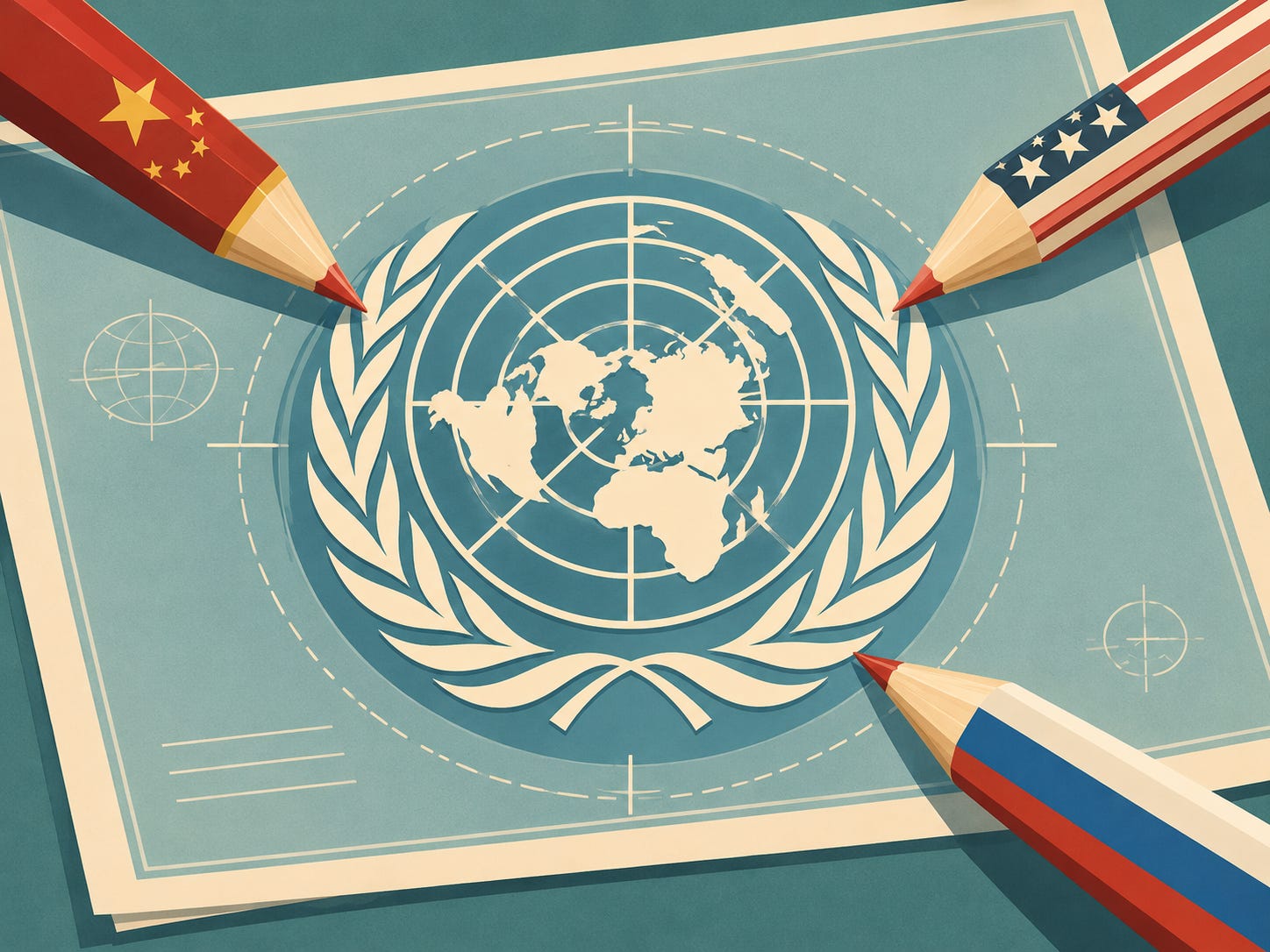
At the time of the Yalta Conference in 1945, the People’s Republic of China (PRC) was not yet established. In later years, Mao Zedong remarked that at Yalta, by choosing to support Chiang Kai-shek, Winston Churchill, Franklin D. Roosevelt, and Josef Stalin had ‘effectively handed all of China over to the US [United States]’. He felt betrayed, particularly by the Soviet Union’s lack of ‘moral’ support of the Communists in China.
To continue the Yalta comparison – which has rightfully fallen on deaf ears in Beijing and the Kremlin – the stage looks a little different. The PRC is a protagonist, and has enjoyed steadfast moral support from Russia in recent years. Indeed, this is now the 50th time that Xi Jinping, General Secretary of the Chinese Communist Party (CCP), and Vladimir Putin, President of Russia, have met in person.
Beijing and the Kremlin are determined to convey their belief that no country’s fate should be at the mercy of another’s whims.
In their opening speeches at the summit in Shenzhen, both the PRC and Russia made self-congratulatory remarks about their perceived success – both independently and jointly – in fostering a ‘multipolar world order’. The Kremlin dismissed the comparisons to Yalta as ‘games of political scientists’ that have ‘nothing to do with reality’.
Whether or not the two countries’ dismissals of an attempt to re-orient the world order are genuine, the symbolic importance of hosting this meeting for the PRC cannot be overlooked. 40 years ago, holding a meeting with the world’s three most powerful leaders in a sleepy fishing village – which is what Shenzhen was at the time – would have been unthinkable.
An apt physical setting, in other words, to showcase how the PRC has converted its economic might into diplomatic might.
Welcome back to Observing China.