

The Investigator | No. 10/2026
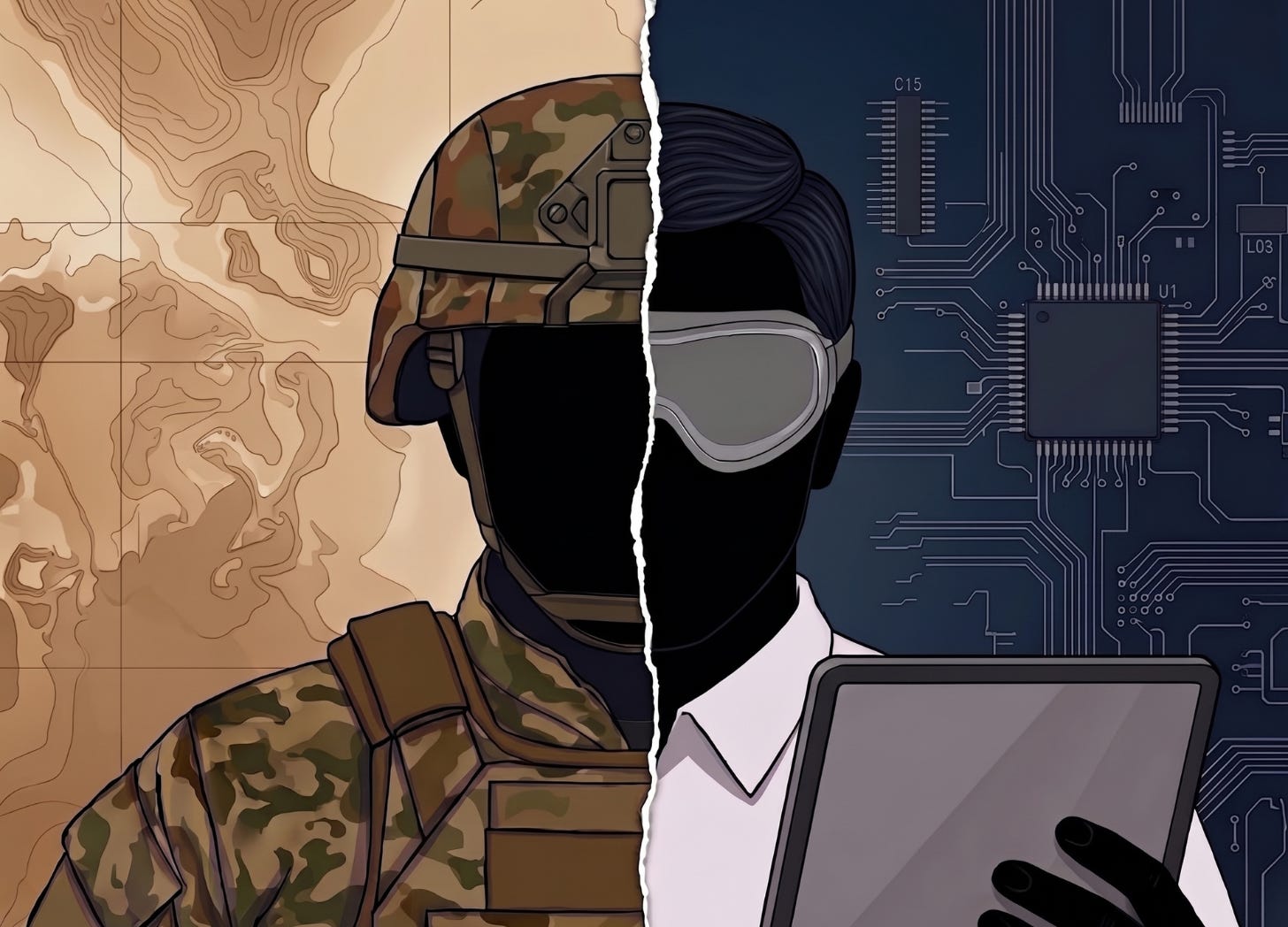
One advantage of the People’s Republic of China’s (PRC) Leninist system over free and open countries is its ability to conscript all elements of society behind the Chinese Communist Party’s (CCP) objectives. A prime objective is to build a ‘world class’ military, or more baldly, to make the People’s Liberation Army (PLA) – the Chinese armed forces – the most powerful global force. The Military-Civil Fusion (MCF) strategy is a major contributor to this aim.
The rise of MCF
In the 1980s, Deng Xiaoping, then Chairman of the Central Military Commission of the PRC, intent on promoting closer cooperation between defence industries and the wider economy, launched a policy of Civil-Military Integration (CMI). CMI appeared regularly in national Five-Year Plans (FYPs), but in 2007, under Hu Jintao, then General Secretary of the CCP, a new expression gained currency: ‘Military-Civil Fusion’.
This denoted far closer relationships and sharing. The bottom line was that technology or processes which might improve the PRC’s defence capabilities were to be shared, including any obtained from foreign joint ventures, acquisitions, or academic research. In some cases, where security parameters allowed, technology could flow from the military to the civilian side. In 2008, to ensure that policy was transformed into action, the State Administration of Science, Technology, and Industry for National Defence (SASTIND) was set up under the Ministry of Industry and Information Technology.
While CMI appeared twice in the 12th FYP (2011-2015), MCF made four appearances. CMI disappeared from the 13th FYP (2016-2020), but ten mentions of MCF emphasised its growing significance. So did the establishment of the Central Commission for Integrated Military and Civilian Development in 2017. That Xi Jinping, General Secretary of the CCP, headed the commission further underlined its importance.
A return to reticence
However, in the 14th FYP (2021-2026), all mention of MCF disappeared. In October 2022, Xi failed to use the term in his work report to the 20th Party Congress, although he did make one brief reference:
We will consolidate and enhance integrated national strategies and strategic capabilities. We will better coordinate strategies and plans, align policies and systems, and share resources and production factors between the military and civilian sectors.
It seems that MCF was frightening the horses: free and open nations had taken notice and were more active in calling for measures to prevent the export of dual-use technologies to the PRC.
MCF re-emerges untrammelled
Such reticence disappeared two years later. At the March 2024 National People’s Congress, during his customary visit to the PLA delegation:
Xi Jinping emphasised the need to build on the momentum, grasp the characteristics and laws of development in emerging fields, and promote the efficient integration and mutual reinforcement of new-quality productive forces and new-quality combat capabilities.
In plain English – or rather Chinese – in detail, and at length, Xi called for vigorous implementation of the MCF policy in the new areas such as quantum technology, Artificial Intelligence (AI), biotechnology, and new communications. In strong affirmation of its importance, the report of Xi’s meeting with the PLA delegation appeared in the Guangming Daily, an organ under the Central Propaganda Department, and also in the People’s Daily, the official newspaper of the CCP, online. Xi was clear:
On one hand, certain emerging technologies from the civilian sector…can be introduced, absorbed, and further innovated for national defence purposes; their successful application in the defence sector fosters the generation of new-quality combat capabilities. This secures the initiative in future military struggles and opens a new chapter in the modernisation of national defence and the armed forces. The key to the efficient integration and mutual reinforcement of ‘new-quality productive forces’ and ‘new-quality combat capabilities’ lies in aligning demands, coordinating plans, and sharing resources.
After its absence from the 14th FYP, MCF returned with a bang in the 15th FYP (2026-2031) under the heading ‘Chapter 56: Consolidating and Enhancing the Integrated National Strategic System and Capabilities’. Its opening few sentences give a taste:
Strengthen military-civilian strategic planning coordination, policy and institutional convergence, and resource and factor sharing. Promote the simultaneous improvement of national defence strength and economic strength. Deepen cross-military-civilian reform. Build a working pattern that is clear in responsibilities, closely collaborative, and standardised and orderly. Accelerate the building of strategic capabilities in emerging fields. Promote the efficient integration and mutual driving of new-quality productive forces and new-quality combat forces.
The phrase ‘the efficient integration of new-quality productive forces and new-quality combat forces’ has become the new watchword. Any shyness around talking about the MCF policy has disappeared. In May 2026, Zhang Zhan, political commissar – an important official – at the National University of Defence Technology was explicit. That his musings were circulated by the Central Party School’s Study Times underlines not just the top-level push behind the joining of ‘new-quality productive forces and new-quality combat forces’, but also that this is a whole-of-nation approach, behind which Party committees within private companies, research institutes, and academia must mobilise.
The article should be read by foreign companies, research organisations, and anyone cooperating with the PRC in technological areas. Space prevents much quotation, but below are some representative excerpts:
This [MCF] is a strategic deployment by the Party Central Committee…an important guarantee for…accelerating the building of our military into a world-class force.
We must deepen military-civilian cooperation, mount systematic joint tackling efforts, pursue two-way transformation, and accelerate the formation of usable, effective new capabilities for defeating the enemy.
To defend territorial sovereignty and integrity, we must strengthen new-quality combat forces through all-domain coordination.
To advance the building of a world-class military, we must aim at the frontiers of world science and technology, focus on strategically contested domains, and promote the deep integration and aligned exertion of the innovation chain, industrial chain, capital chain, and talent chain…Military construction is at a critical period of upgrading quality and increasing efficiency, and emerging domains are the key handle for achieving leapfrog development. To enhance the effectiveness of combat systems, we must thoroughly implement the strategy of military-civil fusion development, give play to the advantages of the new-type whole-nation system…
…we should explore the establishment of a routinised coordination mechanism that integrates education, science and technology, and talent, applying integrated design and collaborative decision-making in the formulation of plans, project layouts, resource allocation, and performance evaluation, and strengthening institutional linkages on project management, fund use, and personnel flow.
We must deeply grasp the contemporary features by which new-quality productive forces and new-quality combat capabilities share technological origins, value orientations, industrial roots, and pathways of advancement, and coordinate the building of strategic emerging industries and new-quality combat forces, promoting the deep coupling of industrial competitiveness with military combat capability and achieving a virtuous interaction and efficient integration of high-quality development and high-level security…We must…establish efficient cross-military-civilian, cross-departmental, cross-domain coordination mechanisms…integrate the development of national defence science and technology into the overall layout of national scientific and technological development…
Seize the keys to fusion and bring out the role of enterprises as the principal actors of scientific and technological innovation. We must…raise enterprises’ participation and voice in major national and military decisions on scientific and technological innovation…We must…improve ‘green channels’ for the transfer of frontier scientific and technological results from civilian to military use, accelerating the conversion of innovation results into real productive forces and effective combat capabilities.
Only when Party committees (Party leadership groups) at every level genuinely play their role as fortress strongholds, fulfil their main responsibilities, coordinate relations across all parties, and build a governance pattern of top-down connection, left-right coordination, and military-civilian linkage can we break down the walls between military and civilian and overcome departmentalism.
This is a call for a renewed and systematic effort to share all civilian technology with the military. Companies are to lead, and the Party committees within them and other organisations are to ensure compliance. It is to become ‘a governance pattern’, with no walls separating the military and civilians.
Why the return to a lack of reticence?
A major theme of the 15th FYP was coordinating development and security. It would be unnatural not to mention MCF in that context. Furthermore, the distinction between civil and military uses of technology is narrowing:
With the rapid advancement of science and technology, national strategic competitiveness, social productive forces, and military combat capabilities have become increasingly intertwined; new technologies, industries, and business models have emerged as vital drivers for enhancing the quality of economic and social development and strengthening national security capabilities.
Additionally, it would be foolish to ignore technological developments, which could be used in defence:
Development in emerging domains is driving profound transformations in the forms of warfare and the mechanisms of victory, giving birth to entirely new modes of combat.
Furthermore, it [MCF] allows for the better integration of national defence and military development into the national economic and social system, accelerates the effective supply of advanced combat capabilities, leverages all high-quality social resources and advanced achievements to bolster military strength, and secures the strategic initiative in safeguarding national security.
With international competition heating up, the CCP sees no choice but to pursue MCF:
Against the backdrop of a new global wave of scientific, technological, and military revolutions, major powers are strategically positioning themselves in these emerging domains, vying to establish comprehensive competitive advantages. In this fiercely competitive landscape, success favours the proactive.
A more centralised system lends itself to implementing MCF:
The rapid advancement of strategic high-tech sectors is currently generating new momentum for industrial transformation and creating fresh opportunities for military revolution, making these technologies core elements in developing new-quality productive forces and combat capabilities.
These reasons for the increased importance of MCF need to be transmitted to the Party members in order to promote implementation, hence the renewed trumpeting of the policy. Moreover, since the Covid-19 pandemic, Xi has been increasingly confident of the rise of the PRC and its technological advances – or he at least believes it necessary to present greater confidence and to downplay any worry about foreign reactions. Successfully wielding the rare earths weapon against the United States (US) has contributed to such confidence.
What this means for free and open countries
Foreign companies, research institutes, academics, and others must be more aware that if their science and technology research has any defence application, it will be fed into the Chinese defence establishment. That is the system. Governments too need to be clear about this. They must ensure that the message is received and acted upon at the operational, company, or research level.
While awareness of which Chinese organisations or individuals may have military connections is important, the CCP’s ensuring of a whole-of-nation approach means that the focus should be more on specific technologies: is it acceptable to risk this or that technology being shared with the PLA?
This makes it important that His Majesty’s (HM) Government sets up a central science and technology committee, made up of departmental (ministry) scientific advisers, and which can rule – quickly – on specific technologies and cooperation. Such a committee would need close contact with outside subject experts.
The seriousness of the MCF issue argues for a further strengthening of the Research Collaboration Advisory Team (RCAT), as well as the team charged with implementing the National Security and Investment Act, which regulates technological inward and outward investment. It is not clear what the recent merging of the Department of Science, Innovation, and Technology with the Department of Business and Trade into the Department for Business, Innovation, Science, and Trade means for the United Kingdom’s economic security and national security. Six shufflings of the departmental pack for business and science in the last 25 years do not encourage confidence in a settled approach to one of the biggest challenges facing Britain.
Meanwhile in the European Union, a report from the Mercator Institute for China Studies (MERICS) suggests that most European countries have ‘yet to find a consistently workable trade-off between scientific freedom and national security’. That might be putting it mildly, given that the report indicates that aside from the Government of the Netherlands, most European countries have done little.
Conclusion
The PRC has many excellent scientists. Global science has traditionally been open, with progress promoted by sharing ideas. Limiting cooperation on national security grounds will result in ‘lose-lose’. However, the alternative is ‘win for the PRC, lose for the rest’, as the CCP – systematically – harnesses scientific cooperation to its war chariots.
Given Beijing’s increasing support for the Kremlin in its full-scale invasion of Ukraine, the risk exists of British technology finding its way onto the battlefield in Europe. The chain is clear: sharing technology with a Chinese company, which shares with military organisations, which aid Russia.
Free and open countries can go along with some of Xi’s Panglossian prescriptions, as set out by Liu Dongmei, Party Secretary of the Chinese Academy of Science and Technology for Development, in the People’s Daily:
General Secretary Xi Jinping has further extended science and technology for the people to the global level, proposing ‘working hand in hand with all countries in the world to build an open, fair, just, and non-discriminatory international environment for sci-tech development, jointly responding to global challenges such as climate change, food security, and energy security, and making science and technology better serve humanity’.
But note should be taken of the title of the piece: ‘Strengthening Scientific and Technological Innovation and Advancing Sci-Tech Self-Reliance and Self-Strengthening’. For the CCP, science and technology are matters of ‘self-reliance’ and ‘self-strengthening’ – in essence, of ensuring that cooperation is minimised and that the PRC is militarily strong. Increasingly, the wolf does not bother to wear sheep’s clothing.
Charles Parton OBE is Chief Adviser to the China Observatory at the Council on Geostrategy, and Senior Research Fellow in International Security at RUSI.
To stay up to date with Observing China, please subscribe or pledge your support!
What do you think about this analysis? Why not leave a comment below?