

The Thinker | No. 03/2026
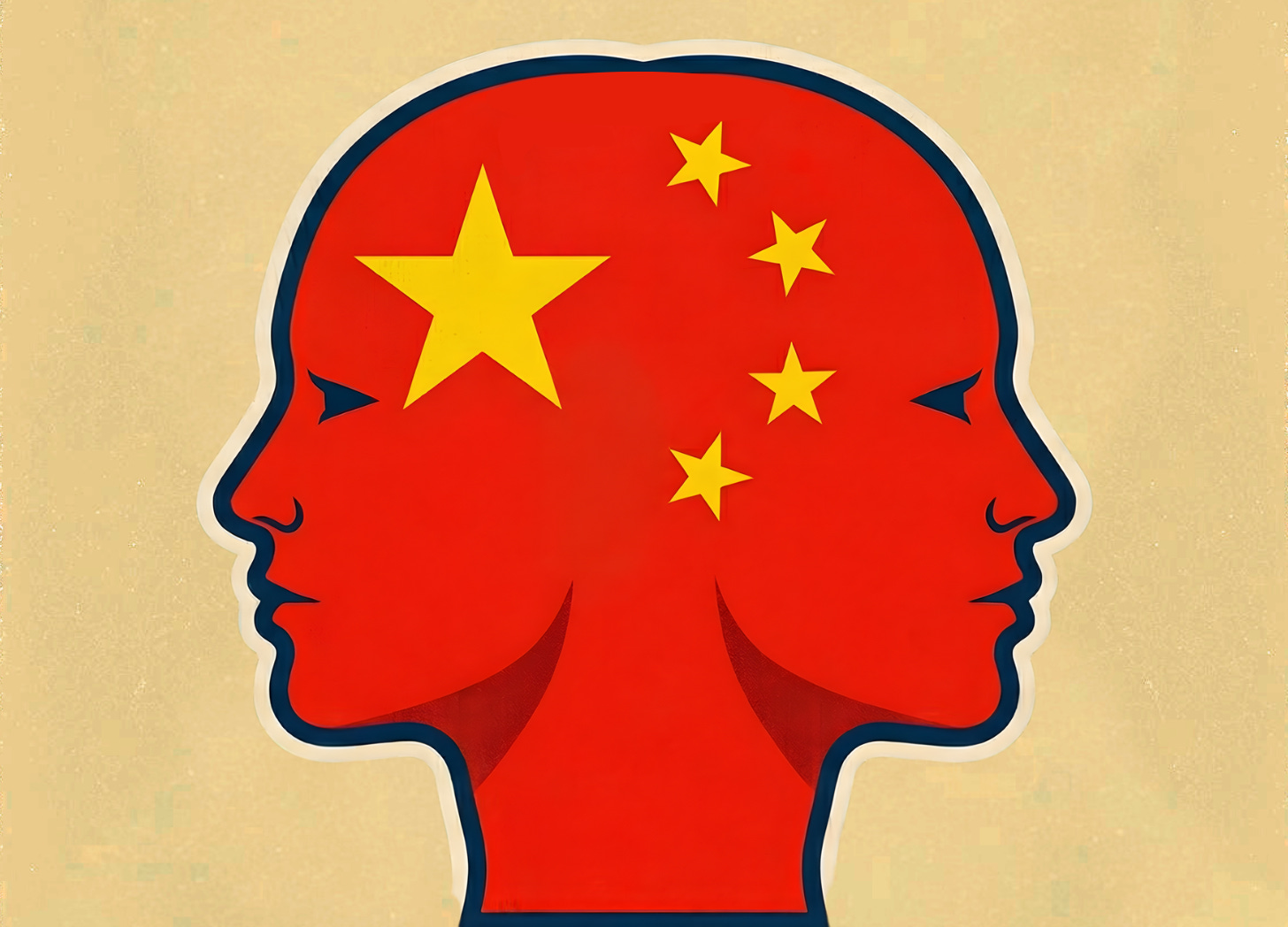
With Washington’s decision to attack Iran, it has become easier for the People’s Republic of China (PRC) to present itself as a force for peace and stability on the world stage. Wang Yi, Minister of Foreign Affairs of the PRC, has positioned his country as an opponent of chaos and a champion of de-escalation. ‘Might’, he has said, ‘does not make right’.
Such talk is not just opportunism. Rather, these messages are part of a longstanding attempt to present the PRC as a moral actor and the architect of an alternative model to the United States (US)-led liberal international order.
Efforts to woo Europeans with promises of peace and economic stability began almost immediately after Donald Trump, President of the US, returned to the White House. Meanwhile, talk of sovereignty and multilateralism has long been used by Beijing to win over countries in Africa and Asia. Such concepts also underpin the Global Security Initiative of Xi Jinping, General Secretary of the Chinese Communist Party (CCP), while also promising an order that: ‘peacefully resolv[es] differences and disputes between countries through dialogue and consultation’.
Yet, this is just one face of Chinese foreign policy. The other is more threatening. Indeed, it has been argued that the PRC has multiple, competing personalities.
This other face includes Beijing’s support for its partners’ expansionist and destabilising activities. The fuelling of Russia’s full-scale invasion of Ukraine is well known, while the PRC’s decision to provide satellite and missile technology to the Iranian regime is beginning to receive greater attention.
At the same time, Beijing goes about coercing and harassing its neighbours, especially Japan and the Philippines, to name its nearest. Yet, as concerning as this regional bullying is, the ultimate litmus test for the PRC’s peaceful global narrative lies just across the Taiwan Strait. Far from pursuing dialogue and consultation, Beijing continues to threaten and practise for its own war of conquest against Taiwan.
If followed through, a Chinese invasion or blockade of Taiwan would have catastrophic consequences for the rest of the world. Recent events in the Strait of Hormuz have already given a foretaste of what happens when global shipping is disrupted. Imagine this on a larger scale. Bloomberg estimates that a conflict over Taiwan could cost the global economy US$10 trillion (£7.9 trillion).
Such severe worldwide consequences ought to make Beijing’s claim that Taiwan is an internal affair redundant, even if this mantra had legs to stand on (which it does not – the PRC has never ruled Taiwan, and the legal basis for its sovereignty claims are contested). However, this will not stop Beijing from arguing this point ahead of or during a crisis. Indeed, at last year’s Munich Security Conference, Wang Yi perversely stated that ‘respect for all countries’ sovereignty and territorial integrity should mean support for China’s complete reunification’.
Is it not now time that this two-facedness is challenged? Rather than simply calling out its hypocrisy, the PRC should be urged to practise what it preaches. Britain and its partners, chiefly the Group of Seven (G7) nations, should call on Beijing to promise not to use force against Taiwan.
Currently, the PRC is repeatedly able to refuse to rule out the use of force, as if this was normal or internationally acceptable behaviour (its additional line that peaceful unification remains its preferred method provides little consolation). Meanwhile, the G7 simply calls ‘for a peaceful resolution of cross-Strait issues’, without attempting to hold Beijing accountable as the primary source of military tension, nor demanding a concrete commitment to non-aggression.
Such a demand could be developed into a more serious proposal that takes into account the PRC’s red lines – that is, committing to peace on the condition that Taiwan does not declare independence (essentially the PRC’s own 2005 Anti-Secession Law, barring the deliberately vague provision that non-peaceful means could be used if the ‘possibilities for a peaceful reunification should be completely exhausted’).
Of course, it is not strictly necessary to get into these details. The expectation here would not be that Beijing would agree to such a commitment. The PRC is unlikely to move closer to renouncing what it believes to be its sovereign right. Even Jiang Zemin’s declaration in his 1995 ‘Eight Points’ that ‘Chinese should not fight Chinese’ was swiftly followed by: ‘We do not promise not to use force.’ After all, deterring Taiwan independence depends on the barrels of many guns. In fact, given trends in Taiwanese public opinion on identity and independence versus unification, Beijing cannot achieve ‘reunification’ without force or the threat of it.
This raises a separate point about the futility of sincerely seeking a peace pledge. Even if Beijing made such a promise, much like the Seventeen Point Agreement of 1951 and the Sino-British Joint Declaration of 1984, in which Tibet and Hong Kong respectively were promised autonomy, the PRC would not honour it.
The point of pushing Beijing to rule out the use of force against Taiwan is to expose the gap between its rhetoric, which presents itself as a promoter of stability, and reality; that the regime is readying itself for war. In refusing to commit to pursuing only peaceful means, Chinese leaders will make clearer to the world their willingness to tank the global economy so they can seize and occupy territory.
Greater clarity on this point will diminish Beijing’s ability to capitalise on the current crisis for free and open nations, and diminish the appeal of its alternative model for global governance. It may also encourage others in the international community, currently sanguine about Chinese intentions, to take a more active role in restraining the PRC, while at the same time pre-emptively confronting Beijing’s attempt to shift the onus for further escalation across the Strait off their own shoulders.
Gray Sergeant is Research Fellow in Indo-Pacific Geopolitics at the Council on Geostrategy.
To stay up to date with Observing China, please subscribe or pledge your support!
What do you think about this Analysis? Why not leave a comment below?
If you're able to consider an opposing view, I suggest you read this:
https://pekingnology.substack.com/p/beijing-is-not-rushing-reunification?utm_source=email&redirect=app-store&utm_campaign=email-read-in-app
I think there is somewhat of a false equivalence here, the Taiwanese have a right to self determination under international law, though international law is not necessarily the standard by which we should judge. Their moral right to self determination should be respected regardless of the letter of the law. But as politicians in our countries attack international law and the institutions that interpret it, we should accept that the CCP has more legitimate reason to question these things than we do (as we wrote most of it).
In terms of the comparison being raised re the use of force: US led extra-territorial wars - regardless of whether or not they are justified in the round - have been a near constant feature of the post war world.
The CCP is reserving the right to use force without using it. I believe that it would be deeply wrong for the CCP to use force, but to reserve the right in principle is no less legitimate than, for example, our maintaining of a nuclear detterant (which I strongly support!)
The CCP is able to present itself as a stabilising and peaceful force in the world, precisely because it is a relative thing. If the US was more restrained in its use of force, then the CCP would need to behave better in order to win the diplomatic game - which appears to be its goal.
Diplomacy, or diplomacy by other means. Presently the CCP are using peaceful means while reserving the other, while we are supplying logistical and basing support to a war of aggression without a formal declaration of war... Our politicians need to be more responsible if we want to maintain moral legitimacy in this area. The future of Taiwan, the global economy, and our place in the world all depend on it.