

Observing China is the essential newsletter to understand the UK-PRC relationship, explained in the context of global developments.
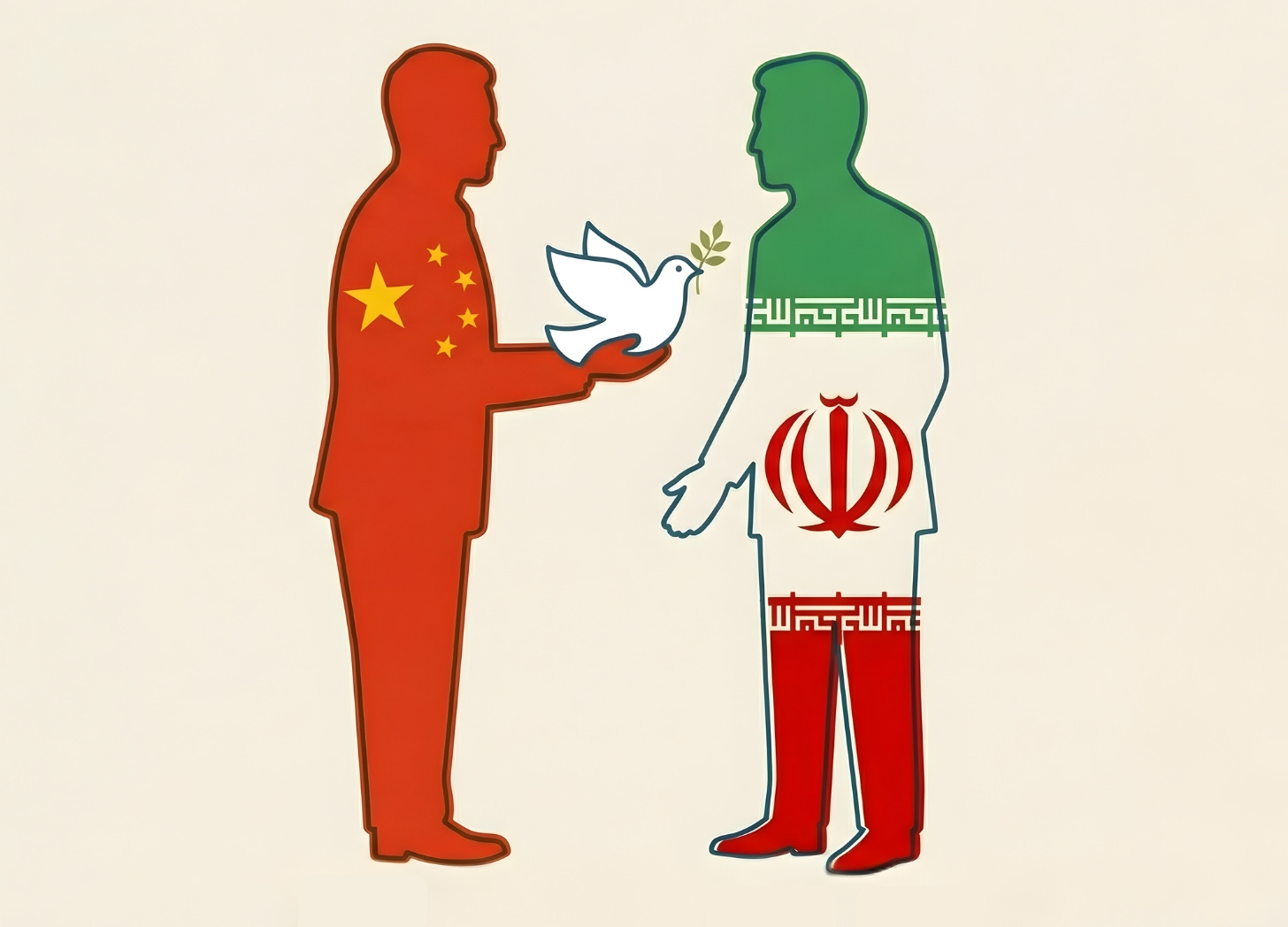
Last week, I wrote about how the Ministry of Foreign Affairs of Pakistan had engaged the British High Commissioner and the Chinese Ambassador to Islamabad to discuss the ongoing war in its neighbour Iran.
Then, it made an impression that this statement made the news. But a week later, this makes sense. Earlier this week, Ishaq Dar, Deputy Prime Minister and Foreign Minister of Pakistan, visited the People’s Republic of China (PRC) for the second time in three months.
The two sides released a joint statement outlining what has been described as a five-point peace plan for ending the conflict in the Middle East. Some analysts suggest that it was Islamabad which approached Beijing, also with the possibility of sounding out the PRC’s willingness to act as a guarantor in a peace deal. The latter would be to make the deal more palatable to Iran, which is close to the PRC. Islamabad is unlikely to have done this without some prior behind-the-scenes conversations with Beijing, Washington, and other important powers, which possibly explains the diplomatic outreach Islamabad has done recently, including with Britain.
This is a complicated situation for Beijing. On the one hand, the PRC would delight in having the opportunity to present itself as the more conciliatory and diplomatic of the two global superpowers in its great power competition with the United States (US). But precisely because of this potential advantage it would gain, Washington may be reluctant to support a significant involvement of Beijing in such a deal.
And also, Beijing’s hitherto cautious response to the conflict has not gone unnoticed, particularly in the Middle East when many of its close partners (not just Iran) have been battered by the conflict. So a prominent role in a peace deal would help the PRC save face. Especially as for years now, Beijing has promoted itself as a more reliable and peaceful partner than Washington to countries around the world.
An offshoot of Beijing’s efforts in mediation has received less media attention than the potential Iran peace deal. A senior Pakistani official announced that, during Ishaq Dar’s trip to the PRC this week, a delegation met with Afghan officials of the Taliban regime in Urumqi, the capital of the PRC’s Xinjiang province. Pakistani officials suggested that it was Beijing that requested the two sides meet. Although a mere initial meeting, the Pakistani officials hope it will set a basis for a ‘full-scale dialogue’ to end months of conflict between Kabul and Islamabad.
Beyond arms sales, the PRC does not typically offer the same level of expeditionary military security guarantees as the US. Beijing plays a different tactic. A crisis hits, and Beijing can paint itself as the sage, diplomatic counterpart to Washington.
Welcome back to Observing China.